The South Asia Media Commission expresses serious concern over an attack on The Times of India newspaper's office in Mumbai, saying the incident proves there is "no thaw" in targeting of media by non-state players due to perceived grievances against it.
"The attack on the office of Times of India group in Mumbai on Saturday is a matter of serious concern," KK Katyal, SAMC's country chapter Media Commission-India's President, said in a statement.
Suspected Shiv Sena workers had vandalised the reception area of Times of India (TOI) building apparently irked by a report in Marathi daily 'Maharashtra Times' which speculated that a sitting Sena MP was on his way to NCP. The newspaper belongs to the TOI group.
"The incident proved -- if a proof was needed – that there is no thaw in the activities of non-state players in targeting the media because of their perceived grievances against published reports," he said.
Holding that Mumbai has lived up to its "notoriety" because of recent anti-media cases, Katyal said the attacks on journalists by non-state sections is an "India-wide phenomenon".
He said incidents against the media in the interior areas often do not get attention.
Referring to arrests made by Mumbai police in the case, he said all those involved in the attack must be apprehended and cases must be taken to court expeditiously to get deterrent punishment for the accused.
Police have already arrested 28 persons suspected to be Shiv Sena members.
The Commission is an associate of South Asian Free Media Association (SAFMA).
31 January 2012


26 January 2012
Challenges to media freedom galore: RSF ranks Sri Lanka 163 in the 173-nation index
“Crackdown was the word of the year in 2011. Never has freedom of information been so closely associated with democracy,” Reporters Without Borders’ annual world press freedom index says.
REPORTERS WITHOUT Borders’ annual world press freedom index showed that 2011 was a rich year for change, especially in the Arab world, but also one that saw growing crackdowns in media freedom worldwide.
Eritrea was the country with least media freedom, in 179th place, with North Korea one place behind.
“Crackdown was the word of the year in 2011. Never has freedom of information been so closely associated with democracy,” the group said as it released its 10th annual index.
Reporters Without Borders is a Paris-based non-governmental organisation that seeks to defend journalists’ freedom to work and combat censorship internationally.
In Afghanistan (150th) and Pakistan (151st), reporters remained under constant threat from the Taliban, religious extremists, separatist movements and political groups. With 10 deaths last year, Pakistan was the world’s most dangerous country for journalists for the second year in a row.
“Never have journalists, through their reporting, vexed the enemies of freedom so much. Never have acts of censorship and physical attacks on journalists seemed so numerous. The equation is simple: the absence or suppression of civil liberties leads necessarily to the suppression of media freedom. Dictatorships fear and ban information, especially when it may undermine them,” it said.
Nepal witnessed a modest improvement in press freedom last year improving the ranking in the Press Freedom Index by 13 positions.
“In Nepal, a decline in attacks by Maoist groups in the south and greater efficiency on the part of the justice system account for the modest improvement in the country’s ranking,” RSF said. “However, press freedom was marred by threats and attacks by politicians and armed groups throughout the year.”
Nepal is ranked 106th. The country was at 119th position in Press Freedom Index 2010.
Nepal’s ranking is however one of the best ranking that the South Asian nations received. Only Bhutan (70) and Maldives (73) are ahead of Nepal while Bangladesh (129), India (131), Afghanistan (150), Pakistan (151) and Sri Lanka (163) all rank lower than Nepal in the 173-nation index.
The media freedom watchdog also added that the Nepali journalists were regularly subjected to threats from rival political groups and their supporters in 2011.
The report noted that violence and censorship on the rise in Asia as violence and impunity persist in Pakistan, Afghanistan and Philippines. It also noted more repression on press in Sri Lanka, Vietnam and China.
“With 10 deaths in 2011, Pakistan was the world’s deadliest country for journalists for the second year in a row,” the report said.
“This year’s index sees many changes in the rankings, changes that reflect a year that was incredibly rich in developments, especially in the Arab world,” RSF said on global review of media freedom.
“Many media paid dearly for their coverage of democratic aspirations or opposition movements. Control of news and information continued to tempt governments and to be a question of survival for totalitarian and repressive regimes. The past year also highlighted the leading role played by netizens in producing and disseminating news.”
Sri Lanka dropped down five places last year from 2010 to rank among the 20 worst countries in a leading survey of press freedom.
The annual World Press Freedom Index for 2011 compiled by Paris based Reporters Without Borders (RSF) has ranked Sri Lanka 163 out of 178 countries ranked. Sri Lanka was ranked 158 in 2010.
The index widely accepted around the world indicates the increasing suppression on media freedom in the country, media organizations point out.
In an accompanying report, the RSF said while violence and impunity persisted in Pakistan, Afghanistan and Philippines, there was more repression in Sri Lanka, Vietnam and China.
"In Sri Lanka (163rd), the stranglehold of the Rajapakse clan forced the last few opposition journalists to flee the country. Any that stayed behind were regularly subjected to harassment and threats. Attacks were less common but impunity and official censorship of independent news sites put an end to pluralism and contributed more than ever to self-censorship by almost all media outlets," the RSF statement said.
Elsewhere, in the South Asian region Pakistan at 151st position was the world's deadliest country for journalists for the second year in a row in 2011 with 10 deaths.
Nepal at 106th has shown modest improvement from the previous year due to a decline in attacks by Maoist groups and greater efficiency on the part of the justice system, the RSF said.
Ranking Bangladesh at 129th position, the RSF reported that opposition groups and the ruling Awami League took turns to attack and obstruct the press.
The survey ranked India at 131st position citing that journalists were exposed to violence stemming from the persistent conflicts in the states of Chhattisgarh and Jammu and Kashmir as well as to the threats from mafia groups.
The United States dropped 27 places in the rank to the 47th due to the many arrests of journalists covering the Occupy Wall Street protests.
The country with the freest media in the world was Finland, followed by Norway, Estonia, the Netherlands and Austria. Ireland came in 15th in the index.
Elsewhere within the European Union, countries such as Bulgaria (80th), Greece (70th) and Italy (61st) failed to address the issue of media freedom violations, largely because of a lack of political will.
Libya came in 154th in the list, while Yemen was in 171th place.
“The future of both of these countries remains uncertain, and the place they will allow the media is undecided. The same goes for Egypt, which fell 39 places to 166th place.”
Syria was 176th, because journalists were unable to work because of total censorship, widespread surveillance, indiscriminate violence and government manipulation.
The report also highlights how pro-democracy movements that tried to emulate the example of the Arab revolutions were brutally suppressed. Vietnam (172nd) saw many arrests, while China (174th) stepped up its system of controlling news and information in response to public dissatisfaction with corruption and other injustices.
The biggest falls in the index were in Africa – Djibouti fell 49 places to 159th, Malawi (146th) fell 67 places and Uganda fell 43 places to 139th.
REPORTERS WITHOUT Borders’ annual world press freedom index showed that 2011 was a rich year for change, especially in the Arab world, but also one that saw growing crackdowns in media freedom worldwide.
Eritrea was the country with least media freedom, in 179th place, with North Korea one place behind.
“Crackdown was the word of the year in 2011. Never has freedom of information been so closely associated with democracy,” the group said as it released its 10th annual index.
Reporters Without Borders is a Paris-based non-governmental organisation that seeks to defend journalists’ freedom to work and combat censorship internationally.
In Afghanistan (150th) and Pakistan (151st), reporters remained under constant threat from the Taliban, religious extremists, separatist movements and political groups. With 10 deaths last year, Pakistan was the world’s most dangerous country for journalists for the second year in a row.
“Never have journalists, through their reporting, vexed the enemies of freedom so much. Never have acts of censorship and physical attacks on journalists seemed so numerous. The equation is simple: the absence or suppression of civil liberties leads necessarily to the suppression of media freedom. Dictatorships fear and ban information, especially when it may undermine them,” it said.
Nepal witnessed a modest improvement in press freedom last year improving the ranking in the Press Freedom Index by 13 positions.
“In Nepal, a decline in attacks by Maoist groups in the south and greater efficiency on the part of the justice system account for the modest improvement in the country’s ranking,” RSF said. “However, press freedom was marred by threats and attacks by politicians and armed groups throughout the year.”
Nepal is ranked 106th. The country was at 119th position in Press Freedom Index 2010.
Nepal’s ranking is however one of the best ranking that the South Asian nations received. Only Bhutan (70) and Maldives (73) are ahead of Nepal while Bangladesh (129), India (131), Afghanistan (150), Pakistan (151) and Sri Lanka (163) all rank lower than Nepal in the 173-nation index.
The media freedom watchdog also added that the Nepali journalists were regularly subjected to threats from rival political groups and their supporters in 2011.
The report noted that violence and censorship on the rise in Asia as violence and impunity persist in Pakistan, Afghanistan and Philippines. It also noted more repression on press in Sri Lanka, Vietnam and China.
“With 10 deaths in 2011, Pakistan was the world’s deadliest country for journalists for the second year in a row,” the report said.
“This year’s index sees many changes in the rankings, changes that reflect a year that was incredibly rich in developments, especially in the Arab world,” RSF said on global review of media freedom.
“Many media paid dearly for their coverage of democratic aspirations or opposition movements. Control of news and information continued to tempt governments and to be a question of survival for totalitarian and repressive regimes. The past year also highlighted the leading role played by netizens in producing and disseminating news.”
Sri Lanka dropped down five places last year from 2010 to rank among the 20 worst countries in a leading survey of press freedom.
The annual World Press Freedom Index for 2011 compiled by Paris based Reporters Without Borders (RSF) has ranked Sri Lanka 163 out of 178 countries ranked. Sri Lanka was ranked 158 in 2010.
The index widely accepted around the world indicates the increasing suppression on media freedom in the country, media organizations point out.
In an accompanying report, the RSF said while violence and impunity persisted in Pakistan, Afghanistan and Philippines, there was more repression in Sri Lanka, Vietnam and China.
"In Sri Lanka (163rd), the stranglehold of the Rajapakse clan forced the last few opposition journalists to flee the country. Any that stayed behind were regularly subjected to harassment and threats. Attacks were less common but impunity and official censorship of independent news sites put an end to pluralism and contributed more than ever to self-censorship by almost all media outlets," the RSF statement said.
Elsewhere, in the South Asian region Pakistan at 151st position was the world's deadliest country for journalists for the second year in a row in 2011 with 10 deaths.
Nepal at 106th has shown modest improvement from the previous year due to a decline in attacks by Maoist groups and greater efficiency on the part of the justice system, the RSF said.
Ranking Bangladesh at 129th position, the RSF reported that opposition groups and the ruling Awami League took turns to attack and obstruct the press.
The survey ranked India at 131st position citing that journalists were exposed to violence stemming from the persistent conflicts in the states of Chhattisgarh and Jammu and Kashmir as well as to the threats from mafia groups.
The United States dropped 27 places in the rank to the 47th due to the many arrests of journalists covering the Occupy Wall Street protests.
The country with the freest media in the world was Finland, followed by Norway, Estonia, the Netherlands and Austria. Ireland came in 15th in the index.
Elsewhere within the European Union, countries such as Bulgaria (80th), Greece (70th) and Italy (61st) failed to address the issue of media freedom violations, largely because of a lack of political will.
Libya came in 154th in the list, while Yemen was in 171th place.
“The future of both of these countries remains uncertain, and the place they will allow the media is undecided. The same goes for Egypt, which fell 39 places to 166th place.”
Syria was 176th, because journalists were unable to work because of total censorship, widespread surveillance, indiscriminate violence and government manipulation.
The report also highlights how pro-democracy movements that tried to emulate the example of the Arab revolutions were brutally suppressed. Vietnam (172nd) saw many arrests, while China (174th) stepped up its system of controlling news and information in response to public dissatisfaction with corruption and other injustices.
The biggest falls in the index were in Africa – Djibouti fell 49 places to 159th, Malawi (146th) fell 67 places and Uganda fell 43 places to 139th.
Nominate an organisation for IPI's Free Media Pioneer Award
Which organisation do you think improved press freedom in its country or region this year? Nominate it for the International Press Institute (IPI) Free Media Pioneer Award - before 10 February 2012.
The annual award honours media or organisations that have fought to ensure freer and more independent media in their country - by raising public expectations of the news, through innovations that have improved news quality or access, or through their tireless defence of press freedom.
All nominations should be submitted via email to: office (@) freeemedia.at
For more information, see:
Call for IPI Free Media Pioneer Award Nominations
http://www.ifex.org/international/2012/01/25/ipi_free_media_pioneer/
The annual award honours media or organisations that have fought to ensure freer and more independent media in their country - by raising public expectations of the news, through innovations that have improved news quality or access, or through their tireless defence of press freedom.
All nominations should be submitted via email to: office (@) freeemedia.at
For more information, see:
Call for IPI Free Media Pioneer Award Nominations
http://www.ifex.org/international/2012/01/25/ipi_free_media_pioneer/
24 January 2012
Data journalism awards
Journalists working for media companies and non-profit organizations, freelancers or individuals can enter a competition.
Sponsored by Google and organized by the Global Editors Network and the European Journalism Centre, the Data Journalism Awards is the first international contest recognizing outstanding work in data journalism.
The awards feature three categories - data visualization and storytelling, data-driven investigative journalism and data-driven applications (mobile or web). Six prizes totaling EU€45,000 (about US$58,283) will be awarded at national/international and local/regional levels.
The award ceremony will take place in Paris during the News World Summit, an annual event hosting 400 editor-in-chiefs worldwide.
The deadline is April 10.
For more information, click here.
http://ijnet.org/opportunities/data-journalism-awards-open-worldwide
Sponsored by Google and organized by the Global Editors Network and the European Journalism Centre, the Data Journalism Awards is the first international contest recognizing outstanding work in data journalism.
The awards feature three categories - data visualization and storytelling, data-driven investigative journalism and data-driven applications (mobile or web). Six prizes totaling EU€45,000 (about US$58,283) will be awarded at national/international and local/regional levels.
The award ceremony will take place in Paris during the News World Summit, an annual event hosting 400 editor-in-chiefs worldwide.
The deadline is April 10.
For more information, click here.
http://ijnet.org/opportunities/data-journalism-awards-open-worldwide
YouTube seeks short, story-driven videos for a global competition
Organized by YouTube, director Ridley Scott with Scott Free Productions, Emirates and the Venice Film Festival, Your Film Festival will award one 15-minute story a US$500,000 production grant.
The Scott Free team will select 50 semi-finalists and YouTube users will vote for their favorites. 10 finalists will have their videos screened at the 2012 Venice Film Festival where one grand winner will be chosen.
Anyone 18 or older can submit videos in any format, including live action short, animation, documentary, web-series episode, TV pilot or others. Videos can't have been publicly shown or distributed prior to January 1, 2010.
Submissions open February 2. The deadline is March 31.
For more information, click here.
The Scott Free team will select 50 semi-finalists and YouTube users will vote for their favorites. 10 finalists will have their videos screened at the 2012 Venice Film Festival where one grand winner will be chosen.
Anyone 18 or older can submit videos in any format, including live action short, animation, documentary, web-series episode, TV pilot or others. Videos can't have been publicly shown or distributed prior to January 1, 2010.
Submissions open February 2. The deadline is March 31.
For more information, click here.
Leica Oskar Barnack Award for Professional photographers
Professional photographers can apply for an award.
The Leica Oskar Barnack Award seeks entries depicting the relationship between man and the environment in a sequence of 10-12 images.
The winner receives a Leica M9-P camera, a EU€5,000 cash prize (about US$6,365) and a EU€10,000 (about US$12,730) lens.
The contest also features the Leica Oskar Barnack Newcomer Award, featuring the same prizes and open to any (prospective) professional photographer age 25 or under at the time of entering.
Entries must have been published in 2011 or 2012, or be long-term projects with at least one recent photo. Apply by March 1.
For more information, click here.
http://ijnet.org/opportunities/photo-contest-seeks-submissions-worldwide
The Leica Oskar Barnack Award seeks entries depicting the relationship between man and the environment in a sequence of 10-12 images.
The winner receives a Leica M9-P camera, a EU€5,000 cash prize (about US$6,365) and a EU€10,000 (about US$12,730) lens.
The contest also features the Leica Oskar Barnack Newcomer Award, featuring the same prizes and open to any (prospective) professional photographer age 25 or under at the time of entering.
Entries must have been published in 2011 or 2012, or be long-term projects with at least one recent photo. Apply by March 1.
For more information, click here.
http://ijnet.org/opportunities/photo-contest-seeks-submissions-worldwide
Nieman-Berkman fellowship in innovative journalism
Journalists worldwide working for a news organization in a business, technology, or leadership capacity can apply for a US$60,000 fellowship at Harvard.
The Nieman Foundation for Journalism and the Berkman Center for Internet & Society will host one fellow for an academic year to carry out a research project on journalism innovation.
Candidates must propose a project relating to journalism’s digital transformation. Examples might include ideas for new revenue streams to fund journalism, the construction of new tools for reporting or research into news consumption patterns.
Fellows receive additional allowances for housing, childcare and health insurance.
Applicants must submit a personal statement, project proposal, work samples, four recommendation letters and a leave of absence letter by February 15.
For more information, click here.
The Nieman Foundation for Journalism and the Berkman Center for Internet & Society will host one fellow for an academic year to carry out a research project on journalism innovation.
Candidates must propose a project relating to journalism’s digital transformation. Examples might include ideas for new revenue streams to fund journalism, the construction of new tools for reporting or research into news consumption patterns.
Fellows receive additional allowances for housing, childcare and health insurance.
Applicants must submit a personal statement, project proposal, work samples, four recommendation letters and a leave of absence letter by February 15.
For more information, click here.
19 January 2012
The Stop Internet Piracy Act (SOPA) and the Protect IP Act (PIPA): What implications for Sri Lanka?
The Stop Internet Piracy Act (SOPA) and the Protect IP Act (PIPA): What implications for Sri Lanka?
18 Jan, 2012 Sanjana Hattotuwa International, Media and Communications, Politics and Governance
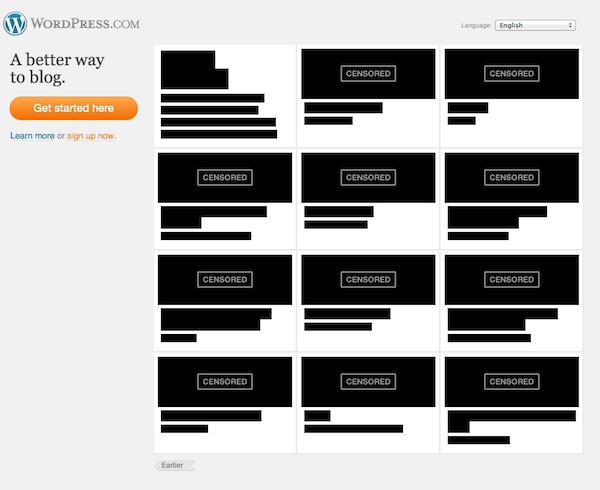
There are a lot of websites in the US that have gone black to protest against the proposed Stop Internet Piracy Act (SOPA) and the Protect IP Act (PIPA). Wikipedia has gone to the extent of taking down its site for the day, and lists its reasons here. Action across such a large number of key internet companies based in the US is unprecedented, and demonstrates clear opposition to the two pieces of legislation. The White House has itself distanced itself from both in their current form. And yet, they remain for consideration by lawmakers. As Wikipedia notes,
…neither SOPA nor PIPA is dead. On January 17th, SOPA’s sponsor said the bill will be discussed in early February. There are signs PIPA may be debated on the Senate floor next week. Moreover, SOPA and PIPA are just indicators of a much broader problem. In many jurisdictions around the world, we’re seeing the development of legislation that prioritizes overly-broad copyright enforcement laws, laws promoted by power players, over the preservation of individual civil liberties.
Neither SOPA nor PIPA affect Sri Lankans today. But if passed, they can contribute to web censorship on a massive, global scale, led by the US entertainment industry. The clear dangers of the legislation to censor existing content on websites and key social media platforms is brought out in the following video. As it notes, the indirect effects of these acts, if passed into law, can quite literally mean the end of the Internet as we recognise it today. Worse, such legislation in the US can spark off similar legislation in other, more repressive regimes. This domino effect could spell the end of not just online dissent, but all dissent given how much of it today is published on, produced for, mediated through, disseminated, archived and engaged via the web and the Internet.
Few may recall that Sri Lanka also tried to bring about its own variant of SOPA and PIPA in 2008. Called the Private Television Broadcasting Station Regulations of 2007, the Government attempted to pass it into law in October 2008. It’s so alike SOPA and PIPA in spirit and form that it’s uncanny. At the time, I wrote a detailed brief of how detrimental this bill was for freedom of expression online, that fed into the affidavit of a case lodged in the Supreme Court – one of many – that challenged the proposed Bill. As noted in it,
The stipulation for all ‘broadcasters’ to enter into an ‘agreement’ that is unspecified in the Gazette, with the Internet Service Provider who provides access to the web and Internet is a draconian measure pointedly designed to curtail and block independent and free production, access and transmission of, inter alia, video content over the Internet and the web.
This is particularly concerning since, to expand on what was flagged in Point 4 of this document, video over the Internet also encourages and facilitates easy audience participation in the form of text and video feedback and comments. Holding ‘broadcasters’ in Sri Lanka, including ISPs, responsible for not just user generated content, but also user generated comments to content published from other sources, is a regulatory nightmare and technically impossible to comply with.
The lack of any clearly defined framework for the nature and scope of the ‘agreement’ enumerated in Regulations 9 (b) and 10 (b) has disturbing and negative implications for the rights of all wired and wireless broadband customers in particular – including all ADSL, 3G mobile telephony and 3G HSPA mobile broadband modem users – as well as all citizens, since those who may not be a customer of an ISP could still use the internet to disseminate video productions (e.g. video content that is uploaded through a cybercafé).
SOPA and PIPA, if allowed to pass in the US, will under the guise of progressive legislation contribute to precisely this sort of regulatory control in the US. It will occur, as flagged in the video above, to a point of absurdity. For example, a copyright violation claim over the soundtrack of a song on the domestic video of a cute cat playing with a ball of wool, uploaded to the web, can result in the entire website being blocked (think about YouTube).
As the Globe and Mail notes, serious concerns with the bills include, inter alia, the fact that,
…. provisions of PIPA and SOPA allow the government – and, in some cases, the individual copyright holders – to compel online payment services, ad networks and search engines to stop doing business with or listing targeted websites. And unlike other laws that focused on websites involved primarily in piracy, the bills expand the focus to include sites on which any infringing content is found, no matter how minuscule. As such, American users of cloud storage or video hosting sites could find the entire site, along with their own content, suddenly much more difficult to access, because a single user uploaded a piece of copyrighted content.
It comes down to this. The bills are at present of greatest concern to those in the US. Yet their potential to influence bad legislation globally, and undermine key websites and social media platforms that are an integral part of democratic change, revolt, dissent and debate is very high. This is a cogent example where what the US preaches, it seems it is unwilling to practice – the freedom of expression it promotes, along with the circumvention technologies it directly supports are at complete odds with the thrust of SOPA and PIPA.
I’ve gone ahead and signed a petition on WordPress.org against the SOPA and PIPA.
I strongly urge you to do the same.
18 January 2012
Pulitzer crisis-reporting grant
Journalists interested in crisis reporting can apply for a US$7,500 travel grant. Applicants should live outside the U.S.
The Persephone Miel Fellowship will fund a reporting project that focuses on a global crisis under-reported in the mainstream American media.
The fellowship, overseen by the The Pulitzer Center on Crisis Reporting in consultation with Internews, is designed to help media professionals outside the U.S do the kind of reporting they've always wanted to do, and enable them to bring their work to a broader international audience. The fellowship will benefit those with limited access to other fellowships or international distribution of their work.
The fellowships are open to all journalists, writers, photographers, radio producers or filmmakers; staff journalists as well as free-lancers and media professionals outside the U.S., who are seeking to report from their home country. Women are strongly encouraged to apply. Applicants must be proficient in English.
The application deadline is February 15.
For more information, click here.
http://ijnet.org/opportunities/pulitzer-crisis-reporting-grant-open-worldwide
The Persephone Miel Fellowship will fund a reporting project that focuses on a global crisis under-reported in the mainstream American media.
The fellowship, overseen by the The Pulitzer Center on Crisis Reporting in consultation with Internews, is designed to help media professionals outside the U.S do the kind of reporting they've always wanted to do, and enable them to bring their work to a broader international audience. The fellowship will benefit those with limited access to other fellowships or international distribution of their work.
The fellowships are open to all journalists, writers, photographers, radio producers or filmmakers; staff journalists as well as free-lancers and media professionals outside the U.S., who are seeking to report from their home country. Women are strongly encouraged to apply. Applicants must be proficient in English.
The application deadline is February 15.
For more information, click here.
http://ijnet.org/opportunities/pulitzer-crisis-reporting-grant-open-worldwide
12 January 2012
UNESCO/Guillermo Cano World Press Freedom Prize 2012 seeks nominations
Do you know an individual, organisation or institution that is defending press freedom? If so, send in your nomination for the UNESCO/Guillermo Cano World Press Freedom Prize 2012 by 15 February 2012.
Named after Guillermo Cano Isaza, a Colombian journalist who was assassinated in 1986 after calling for drug traffickers to be brought to justice, the award especially recognises those who defend press freedom at great personal risk.
The winner will receive US$25,000 at a ceremony on World Press Freedom Day on 3 May 2012.
MORE ON THE WEB
UNESCO is seeking nominations for UNESCO/Guillermo Cano World Press Freedom Prize 2012 (UNESCO)
Named after Guillermo Cano Isaza, a Colombian journalist who was assassinated in 1986 after calling for drug traffickers to be brought to justice, the award especially recognises those who defend press freedom at great personal risk.
The winner will receive US$25,000 at a ceremony on World Press Freedom Day on 3 May 2012.
MORE ON THE WEB
UNESCO is seeking nominations for UNESCO/Guillermo Cano World Press Freedom Prize 2012 (UNESCO)
Subscribe to:
Posts (Atom)